 Go up
Go up


Exploring SimplyMap Data: Biking to Work in the US
Posted on Jul 09, 2015 by Admin
In this week’s SimplyMap report, we set out to find which cities have the highest percentages of people who use their bike as their mode of transportation to work in the US. Let’s get started!
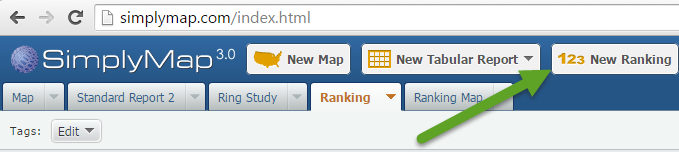
1. Create a new Ranking Report by selecting “New Ranking” at the top of Simply Map:
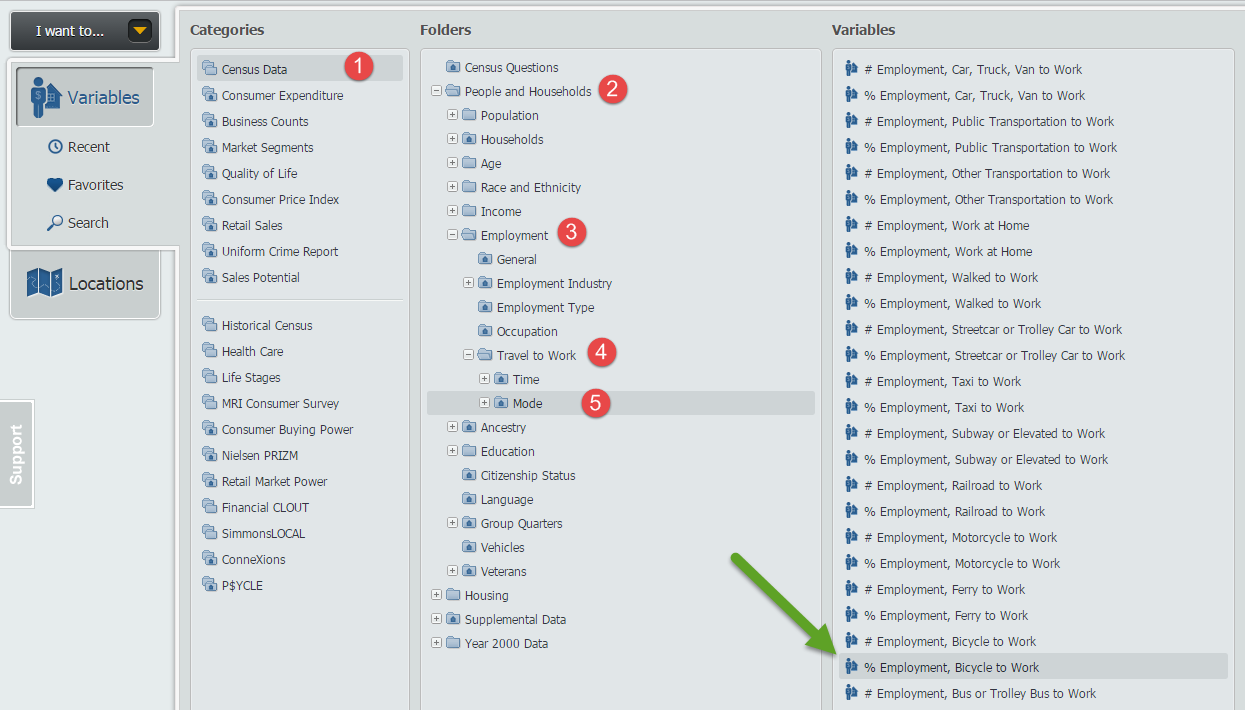
2. Select the variable to rank. Follow this path to find the % Employment, Bicycle to Work, 2014 variable: Census Data » People and Households » Employment » Travel to Work » Mode. Image below for reference.
3. Open the Locations panel and choose USA as your geography. Close out the Locations panel to generate your report. Use the “Analyze data by” tool to select cities.
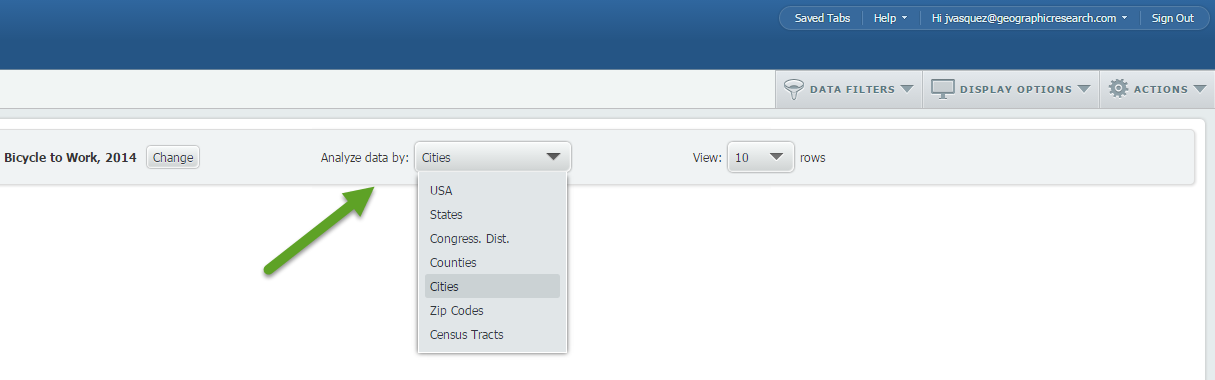
Because our variable is using a percentage, the ranking report may produce results skewed towards cities with a smaller population. To address this, we can quickly apply a data filter to only show cities with a population greater than 50,000.
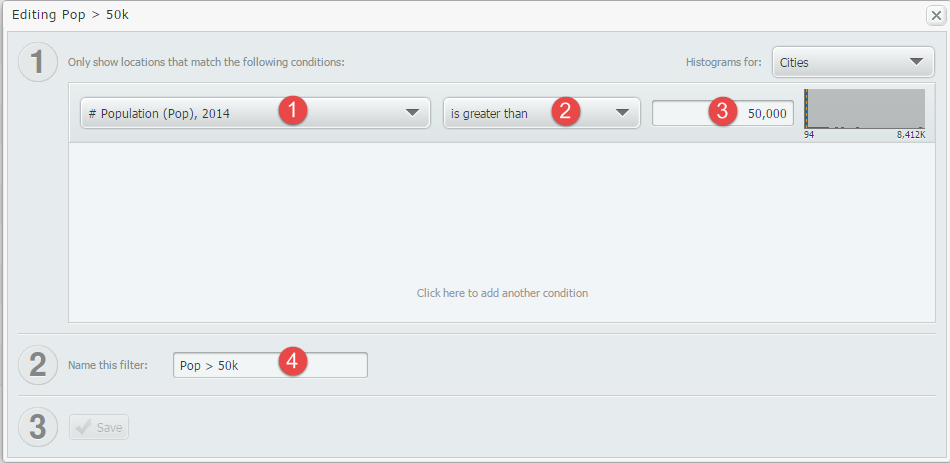
Favorite the variable titled, # Population (Pop). This can be found here: Census Data » People and Households » Age » Total. Return to your report, and select Create New Filter from the Data Filters Dropdown towards the top right. Follow the steps below to create and apply the filter:
- Scroll down on the variables dropdown to the Favorites list. Select # Population (Pop)
- Set the second dropdown to be “is greater than”.
- Enter 50,000 into the value field.
- Name the filter
- Save
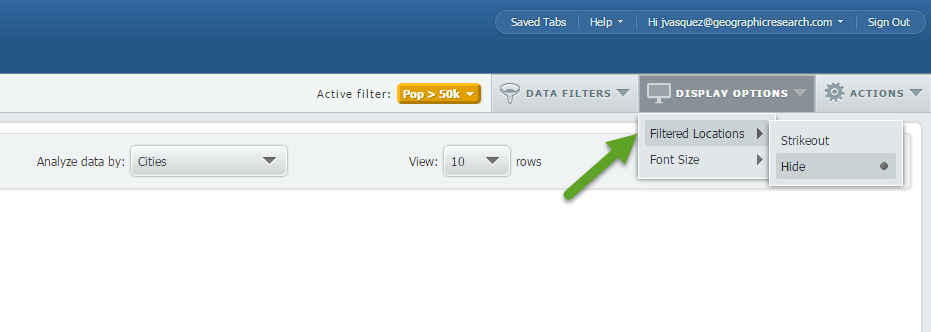
Once applied, your new report will be generated to show only cities that have a population greater than 50,000. Cities that don’t meet this criteria will be displayed with a strikethrough. To hide this, click on Display Options > Filtered Locations > Hide to see your final list.
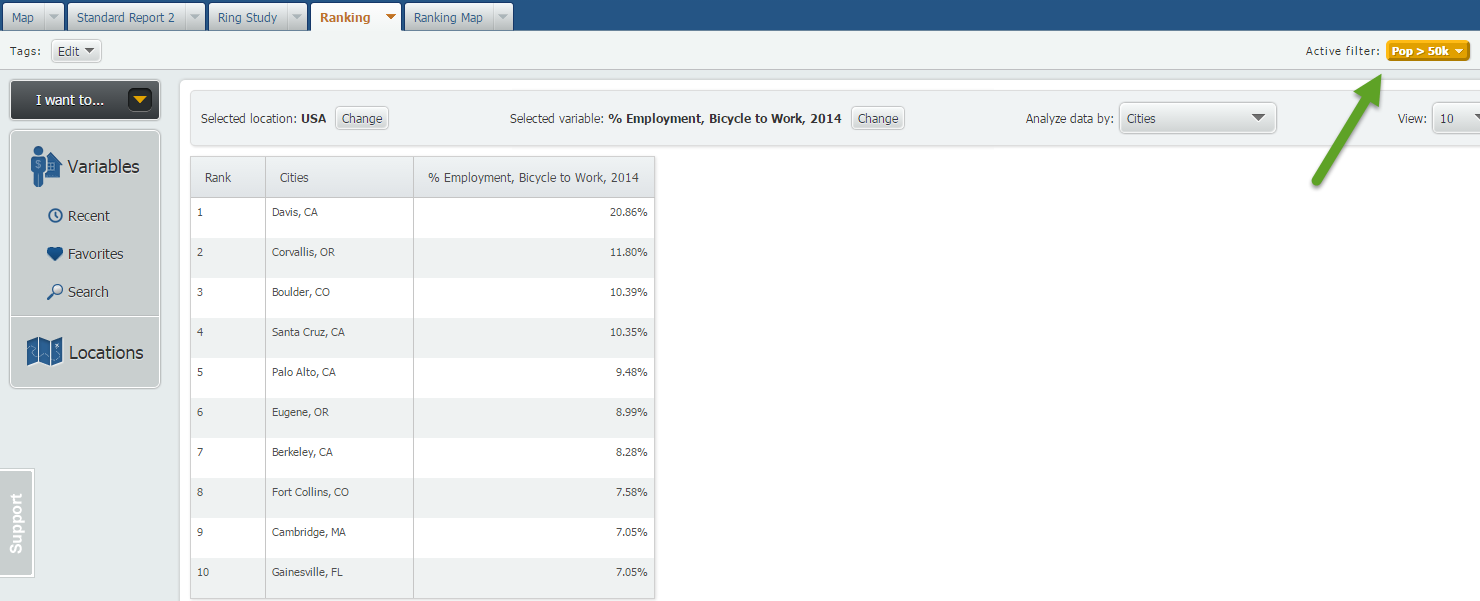
Davis, CA takes home the distinction of having the most bike to work commuters in the United States. A little research on Wikipedia reveals that Davis, CA’s motto is: Most Bicycle Friendly Town in the World. Our results here seem to prove that motto (at least in the US)!
Stay tuned for more SimplyMap reports and tips!
More from SimplyAnalytics


Posted on Dec 08, 2017 by Admin
Good afternoon, readers! This week we’re going to talk about project management in SimplyAnalytics and how to best take advantage of it. Why are projects needed? Many users have multiple...
Posted on May 06, 2013 by Admin
We will be exhibiting at ALA 2013 at McCormick Place in Chicago, IL, June 28-July 1. The ALA Annual Conference programs, updates, conversations, and other events cover all of the key issu...
Posted on Feb 19, 2016 by Admin
Drop by booth #857 at PLA 2016 to meet the SimplyMap team and learn more about the features and functions behind SimplyMap. Have a Ghirardelli Chocolate while we present SimplyMap and off...
Posted on Jun 09, 2016 by Admin
In this week’s blog, we’ll be featuring our newest data offering, PRIZM® Premier. If your institution currently subscribes to PRIZM data, this new module is available at no additional cos...
Posted on Jul 30, 2018 by Admin
Hello readers! Welcome to this week’s blog. This week we will feature the Related Data Table view and how you can use it to maximize your productivity in SimplyAnalytics. What is it? The ...
Posted on Feb 24, 2019 by Admin
We will be exhibiting at SCELC* Vendor Day on March 14th. Visit us at table 510 and attend one of our two sessions demonstrating SimplyAnalytics. The presentations will highlight newly av...
Posted on May 03, 2011 by Admin
The GRI team is very excited to announce the launch of SimplyMap 2.0! Completely redesigned, it is now easier than ever to access data and create professional quality thematic maps and re...
Posted on Feb 21, 2018 by Admin
We are looking forward to sharing SimplyAnalytics with the public library community at the upcoming PLA 2018 Conference in Philadelphia, PA. Our team will be exhibiting in Booth #855. Vis...
Posted on Apr 17, 2018 by Admin
The SimplyAnalytics team would like to congratulate Rachel Holder, MLS candidate at Indiana University for being selected as this year's recipient of the BRASS Student Travel Award! ...
Posted on Oct 29, 2015 by Admin
Did you know that SimplyMap allows you to search for businesses by NAICS or SIC codes? Searching by these codes is a great alternative to the general keyword search. Using the keyword sea...